City Adds Parking Meters on El Cajon Boulevard between Ohio St and 37th St despite community objections and lack of utilization.
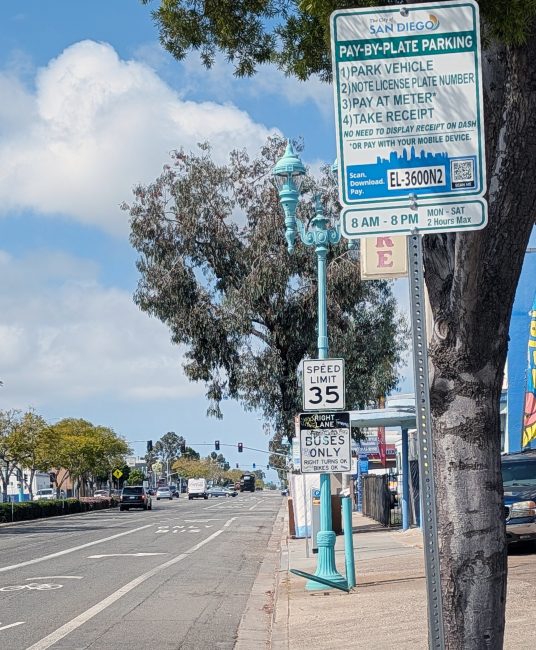
Despite results from their own study and objections from business owners and The El Cajon Boulevard Business Improvement Association, the City of San Diego has added parking meters on over 20 block fronts in North Park and City Heights.
We have long been proponents of the use of meters to manage parking demand when and where appropriate. Parking meters serve as a useful tool to increase available spaces by promoting turnover and leaving spaces open for customers. They also provide the added benefit of bringing resources back into the community that can be used for much-needed improvements, especially related to active transportation and increased parking inventory.
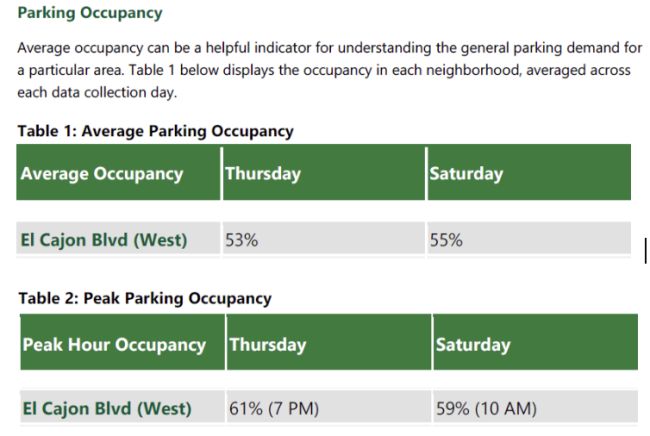
However, with parking occupancy well below the 85% target, this section of El Cajon Boulevard does not meet the standards normally used to deploy meters. The Mid-City Community Parking District, which we have managed since its inception, partially funded the study referenced by the City. In our review of the results with City staff in January 2025, it was determined that, with average occupancy of 55%, meters were not warranted. Instead, we decided to pursue instituting time limits where appropriate to create turnover.
The points we have made:
Lack of Communication/ Community Process
Signs went up without notices being sent to businesses or residents. A primary concern during the temporary dissolution of the parking districts was the potential for a lack of communication with local stakeholders.
Historically, Community Parking Districts were required to send formal notices and hold multiple public meetings over a 60-day period. MCCPD also distributed informational materials we developed about the benefit of meters when warranted.
The area of El Cajon Boulevard (between the 805 and 15) does not meet the City’s standard occupancy threshold for meter installation.
The City typically uses an 85% occupancy benchmark. The Mid-City Community Parking District study (partially funded and managed by us) found an average occupancy of 55%.
In our January 2025 review with City staff, it was determined that meters were not warranted based on these results.
Many blocks lack any time limits. To create turnover, time limits should be installed first.
Negative Impacts
Bad economic policy: At 55%, the city is essentially trying to solve a congestion problem that doesn’t exist, which can deter commerce.
If the city installs meters when occupancy is only 55%, they are prioritizing revenue generation over traffic management.
From a business perspective, this can negatively impact foot traffic before a parking shortage even exists.
Spillover into Neighborhoods: Drivers will hunt for free spots on nearby residential side streets rather than pay for an underutilized metered spot. This will frustrate residents.
Poor use of City funds: Based on recent reports, a new multi-space parking meter kiosk in San Diego costs approximately $5,400 each (with installation). With 17 new kiosks and a handful of single meters, this approximately $100,000 expenditure could be a poor investment considering the low utilization. Compounded by a decrease in sales that businesses could suffer would have a negative impact on sales tax.
Requests Made:
Install 2 hour parking first
Establish an expedited process for adding 15- or 30-minute green zones to support businesses that rely on quick-turnover parking.
End time limits at 6pm. Ending at 8pm has a negative impact on residents living on and adjacent to El Cajon Boulevard.
Consider lower-than-standard meter rates given current occupancy levels.
The Boulevard has sent a memo and had a follow up meeting with the Mayor’s office and City Transportation staff. So far they are unwilling to make any changes to their meter implementation. You can read the memo here. They have agreed to share utilization data and seemed open to make changes based on the results.
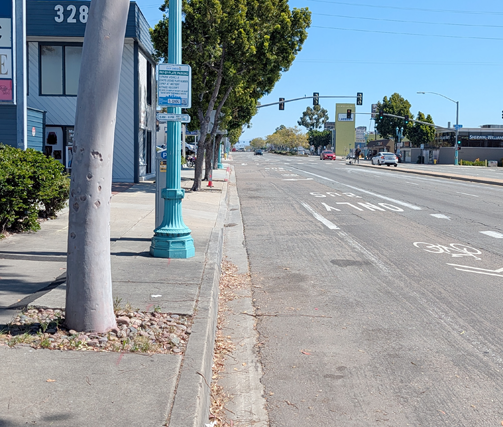
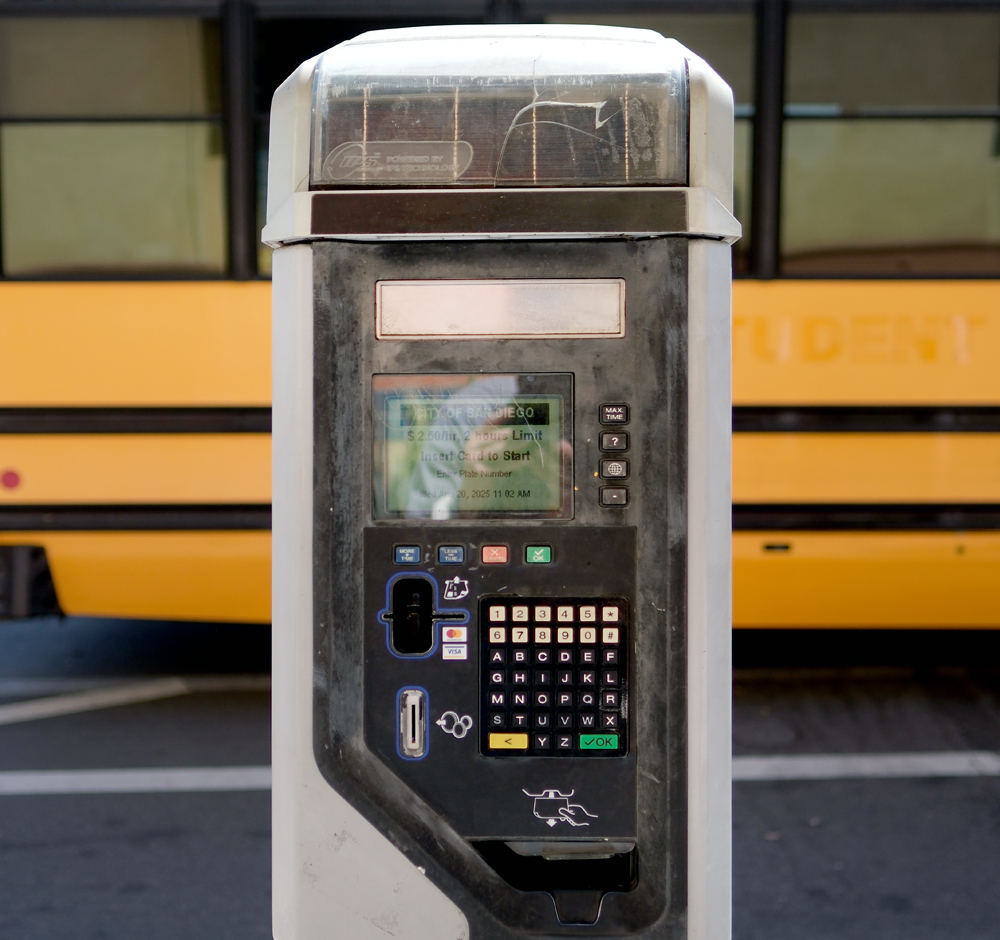
Empirical data, as seen in the photo below, seems to suggest that utilization of the meters is very low at this point.
The Data
The Mid-City Community Parking District, which we managed since its inception, partially funded the study referenced by the City as their data source for making these changes. In our review of the results with City staff in January 2025, it was determined that, with average occupancy of 55%, meters are not warranted.
85% Utilization Benchmark
Availability: At 85% occupancy, approximately 1 out of every 7 spaces remains open. This ensures that drivers can typically find a spot on a given block without circling repeatedly, which reduces traffic congestion and carbon emissions.
Bad economic policy: At 55%, the city is essentially trying to solve a congestion problem that doesn’t exist, which can deter commerce.
If the city installs meters when occupancy is only 55%, they are prioritizing revenue generation over traffic management. From a business perspective, this can negatively impact foot traffic before a parking shortage even exists.
Impacts on Business
Customer Deterrence: Approximately 53% of shoppers say they avoid stores if only metered street parking is available. When parking is already easy to find (55% occupancy), the added cost of a meter feels like an unnecessary “tax” to customers, who may instead drive to areas with free parking.
Reduced “Browsing” Time: Meters with strict time limits or high costs discourage customers from lingering. Instead of shopping and then grabbing a coffee, they may leave as soon as their primary task is done to avoid a ticket or paying for another hour.
Perceived Lack of Value: Because the spots aren’t scarce, the “market rate” should technically be low. Charging for them can create a sense of resentment among local patrons who feel the city is “nickel and diming” them.
Spillover into Neighborhoods: Drivers will often hunt for free spots on nearby residential side streets rather than pay for an underutilized metered spot. This can frustrate residents.
The Core Economic Argument: “The Deterrence Effect”
When parking is abundant (55% occupancy), the “price” of parking should be near zero to encourage economic activity.
Customer Loss: Studies on retail traffic show that when there is an excess supply of parking, even a small fee (e.g., $0.50/hour) can reduce customer traffic by up to 30%.
Public Safety Angle: Argues that lower foot traffic leads to “dead streets,” which can increase crime or the perception of safety issues in the area.
Time Limits: If the goal is “turnover” (preventing people from parking all day), 2-hour time limits with no fee achieves the city’s stated goal of moving cars without punishing customers.
In the two block fronts (out of 17 in the impacted area) that do have utilization and occupancy closer to the 85% target, there are currently no time limits. In our more than 20 years of experience managing the parking district on El Cajon Boulevard, the City required time limits before installing meters. This strategy is also recommended in the study.